Eleven Springs of Next Year
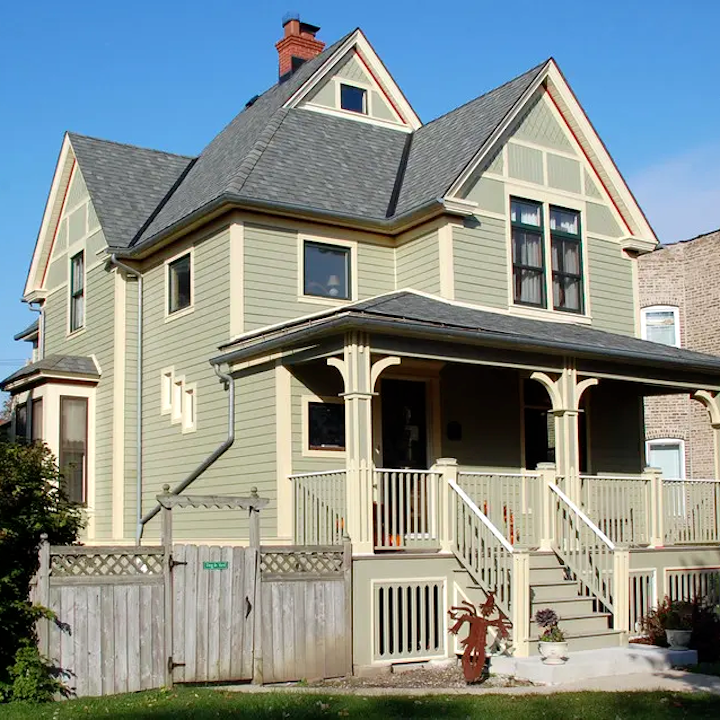
A 2,500 square foot Colonial in East Memphis sat between two fresh paint jobs on either side. The owners had lived there 11 years. Every spring the south-facing fascia peeled a little more. Every spring they told themselves next year.
Two contractors came out the same week. Same color, same finish, same timeline. One wrote $4,800 on the estimate. The other wrote $9,200.
She called the expensive one back.
"I need you to explain this," she said. "Because the other bid is half yours for the same house."
He didn't argue. He'd heard it before.
"Did you look at what's under the paint?" He walked her to the south-facing wall and pressed his thumb against the fascia board. A piece of paint the size of a playing card fell off. "Five layers. Nobody's scraped this since the first coat went on. The wood underneath needs work before any paint touches it." He pointed at the lower bid. "That number is paint over paint. Mine's starting from the wood."
She looked at the bare spot where his thumb had been.
"So the forty-four hundred is in the part I can't see from the driveway."
"That's where it always is."
Exterior painting in Memphis runs $1.83 to $4.67 per square foot of paintable surface. A typical 2,500 square foot home costs $3,299 to $11,212. The paint itself is maybe 20% of the job. The rest is what's underneath it, and what's underneath it is where most bids disagree.
The Scraping
A contractor in Germantown pulled up to a Victorian that looked like it just needed fresh paint. The homeowner was already outside, pointing at the peeling section near the roofline.
"I've been putting this off for three years," she said. "That spot up there is the only real problem. The rest is just faded."
He set up a ladder and ran a scraper across a section she'd called fine. Paint came off in sheets.
"Come look at this." He held out a curl of paint five layers deep.
She climbed two rungs and looked. "That all came off one pass?"
"One pass." He pressed his thumbnail into the fascia board where the paint had been. The wood crumbled. "See that? Soft. Nobody checked under the paint in decades. Every crew just painted over the last coat."
"So every painter I've paid in 20 years just made it worse."
"Those crews weren't cutting corners on purpose. They were painting what they could see. Nobody scraped deep enough to find what was underneath." He came down the ladder. "I won't know the full scope until I scrape the whole exterior. But if the south side looks like this, the west side probably does too."
"How much are we talking?"
"Scraping, sanding, caulking, and priming on a house like this runs $1,000 to $2,500. If we find rot, we're replacing wood before any paint goes on. That's another $3,000 to $6,000 depending on how far it goes."
"So I'm paying for 20 years of skipped prep work in one shot."
"Better one shot than another coat on top of soft wood."
She looked at the curl of paint in his hand. Five layers and nobody had looked at the wood since the first one.
Standard prep work on a Memphis exterior runs $1,000 to $2,500. When deferred maintenance has left rot behind the paint, wood replacement adds $3,000 to $6,000 before a single coat goes on. The age of the paint decides the prep, and the prep decides whether the next coat will last or just join the stack.
But prep isn't the only thing hiding behind old paint. On homes built before 1978, the paint itself may be the problem.
The Test
A homeowner in Midtown had a 1948 bungalow that needed exterior work. He'd gotten three quotes. Two came in around $5,500. The third was $7,800.
He called the expensive contractor.
"I went with three bids like everybody says to do," he said. "Two of them are within a few hundred of each other. Yours is twenty-three hundred more. I'm trying to understand what I'm paying for."
"Did either of them mention lead?"
"No."
"Your house was built in 1948. Any home built before 1978 may have lead paint." The contractor pulled out his materials list. "My bid includes lead-safe work practices. Containment, proper disposal, the whole protocol. That's $500 to $2,000 on top of a standard bid. Testing alone runs $300 to $500."
"And the other two just weren't going to deal with it?"
"They didn't account for it. Either they didn't check the build date or they're planning to scrape without containment." He set his pen down. "That's not a price difference. That's a compliance difference."
The homeowner looked at his three quotes again. "I did everything right. Got three bids. And two of them left out the part that's actually required by law."
Federal EPA rules require certified lead-safe work practices when disturbing more than 20 square feet of exterior paint on pre-1978 homes. In Memphis, where entire neighborhoods were built in the 1940s and 1950s, lead-safe work adds $500 to $2,000 to a paint job and testing runs $300 to $500. The year on the deed determines whether it applies. Two of three contractors never asked.
Lead paint adds cost based on the age of the house. But even on newer homes, the siding material itself changes what the job costs before anyone opens a can.
The Surface
Two ranch houses sat on the same street in Bartlett. Same footprint, same square footage, same crew quoting both jobs. One came back at $4,200. The other at $6,800.
The homeowner with the higher quote called the contractor.
"I've been talking to my neighbor," she said. "Same paint, same crew, same week. His is twenty-six hundred less. I'm starting to wonder if I got the wrong number."
"His house is aluminum siding. Yours is original wood lap."
He walked her to the corner of her house and ran his thumb down a wood lap seam. His nail caught on every joint. Caulk crumbled out of two of them. Then he walked her across the street and ran the same thumb down her neighbor's aluminum siding. Smooth. Nothing caught. Nothing crumbled.
"Feel the difference?"
She ran her own hand down both surfaces. "His is like running your hand over a countertop. Mine grabs at everything."
"Wood absorbs paint. Needs more coats, more prep, more caulk at every seam. Budget $2.00 to $3.50 per square foot for wood. Aluminum and vinyl run $1.50 to $2.50. Fiber cement's in between at $1.75 to $2.75." He pointed at the caulk that had fallen out of her seam. "His siding doesn't absorb anything. I clean it, prime it, paint it. Yours I have to sand, fill, caulk, prime, then paint."
"So the twenty-six hundred isn't about the paint at all. It's the wood."
"Every time. The material decides the price before I open a can."
She looked at the crumbled caulk on the ground, then across the street at her neighbor's aluminum siding. Same color would go on both houses. Only one of them would fight it.
Wood siding costs $2.00 to $3.50 per square foot to paint. Aluminum and vinyl run $1.50 to $2.50. Fiber cement falls between at $1.75 to $2.75. Brick homes that only need trim painted typically cost $1,500 to $3,500 total. The substrate determines the labor before the color ever gets chosen.
Siding type changes the cost per square foot. But those square feet get more expensive the higher they sit off the ground.
The Ladders
A Cooper-Young cottage and a Germantown two-story colonial had similar footprints. The cottage quote came back at $4,800. The colonial at $6,500.
The colonial's owner was confused.
"I measured," he said. "The paintable square footage is almost identical. Why is mine thirty-five percent more?"
The contractor walked him to the side of the house and pointed at a faint horizontal line about eight feet up. Above it, the paint was a shade lighter. Below it, slightly darker with a thin band of grime at the break.
"See that line?"
"I never noticed that before."
"That's where the last crew's ladders stopped. Everything below it got two solid coats. Everything above it got one coat from an extension ladder. The coverage is thinner because the angle is worse and the work is slower." He stepped back. "Everything above the first floor roofline takes ladders or scaffolding to reach. That means slower work, more setup time, and more risk for the crew."
"So they're not just painting slower up there. They're painting worse."
"Not worse. Harder. Every move of that ladder is time my crew isn't painting. Two-story work adds roughly 30 percent over single-story pricing on the total job. Three stories pushes that higher." He pointed up at the dormers. "If you've got complex rooflines like those, we may need scaffolding or a lift. That's $200 to $500 per day on top of the labor."
"Same amount of wall, different amount of ladder."
"That's exactly it. And I'm going to make sure that line disappears."
A small single-story home in Memphis runs $1,980 to $4,215 depending on paint quality. That same small home at two stories runs $2,583 to $5,397. A large home over 2,500 square feet with two stories ranges from $6,887 to $14,393. The footprint stays the same. The height changes everything.
Height and siding and prep all affect the labor. But the paint itself -- what's in the can -- determines how many times a homeowner will pay for all of it.
The Calendar
An East Memphis homeowner painted with builder-grade paint in 2018. By 2024, the south-facing side was fading and chalking. Her neighbor across the street had painted the same year with premium paint. Still looked fresh.
She called a contractor to repaint.
"I'm back where I started," she said, looking at the chalking. "Six years and it looks like this."
He ran his hand across the surface. White residue came off on his palm. "Builder-grade. It breaks down faster in UV." He wiped his hand on his jeans. "Premium paint costs $60 to $80 per gallon but lasts 10 to 15 years. Builder-grade costs $25 to $35 and gives you 5 to 7 years."
"So the $800 I saved on paint is about to cost me another full repaint."
"That's the math. This repaint's going to run you about $5,500. If you'd gone premium the first time, you'd still be looking at a good paint job for another four or five years."
She looked across the street at her neighbor's house. Same year, same sun, same Memphis weather. One house needed repainting. The other didn't.
"And I can stop having this conversation in six more years."
"You can stop having this conversation."
Builder-grade paint lasts 5 to 7 years on Memphis exteriors. Premium paint lasts 10 to 15 years. The upgrade costs roughly $500 to $1,000 on a typical home. For homeowners staying more than 5 years, the premium pays for itself by eliminating one full repaint cycle. Memphis weather dictates timing too -- spring and fall are ideal, summer heat dries paint too fast, and winter cold prevents proper curing.
The paint quality, the prep work, the siding type, the height -- a homeowner can research all of it. The one thing that doesn't show up in the research is whether the crew holding the brush will actually do what the estimate says.
The Contractor Question
I watched a homeowner in Collierville do everything right last year. Three quotes. Three companies with wrapped trucks and five-star reviews. Before-and-after photos on every website. Professional estimates left in the mailbox.
She still had no way to know.
No way to tell which crew would scrape down to the wood and which would spray over failing paint. No way to know if the primer coat would actually happen or get skipped to save a day. No way to verify that the person on the ladder carried workers comp.
That's the gap this platform exists to close.
The painting contractor connected through here holds an active Tennessee Board for Licensing Contractors license with a monetary limit of $25,000 or higher. They carry $100,000 in general liability insurance and workers compensation for every crew member on the job. Their references were called, not collected. Their license was verified directly with the state. They were vetted in person by someone with more than two decades in Memphis construction.
That's the part that doesn't show up in a Google search.
Most estimator sites work by collecting your contact information and selling it to three to five contractors who then compete for your business with aggressive follow-up calls. This platform works differently. When you request a contractor introduction, we match you with one painter whose licensing, insurance, and work history have already been verified. One contractor, one homeowner, one conversation. No bidding wars and no phone spam.
The estimator itself requires nothing from you. No account creation, no email address, no phone number. Run as many estimates as you want, adjust the square footage, compare paint grades -- all of it happens in your browser using current Memphis pricing data. Your information stays yours until you decide otherwise. The only time we ask for contact details is when you choose to connect with a verified contractor for a formal bid.
Exterior painting connects to curb appeal projects. Paint refreshes pair naturally with siding repairs. Deck staining often happens in the same project. And new entry doors look best against fresh trim. Flashing and drip edge touch-ups coordinate well with roofing work. New window casing and headers need paint before caulking.