Same Fifteen Windows, Three Different Jobs
Memphis window replacement starts at $3,700 for a small home, with most projects running $400 to $1,200 per window depending on frame condition and glass package. Full-house replacements with hidden repairs can reach $27,400.
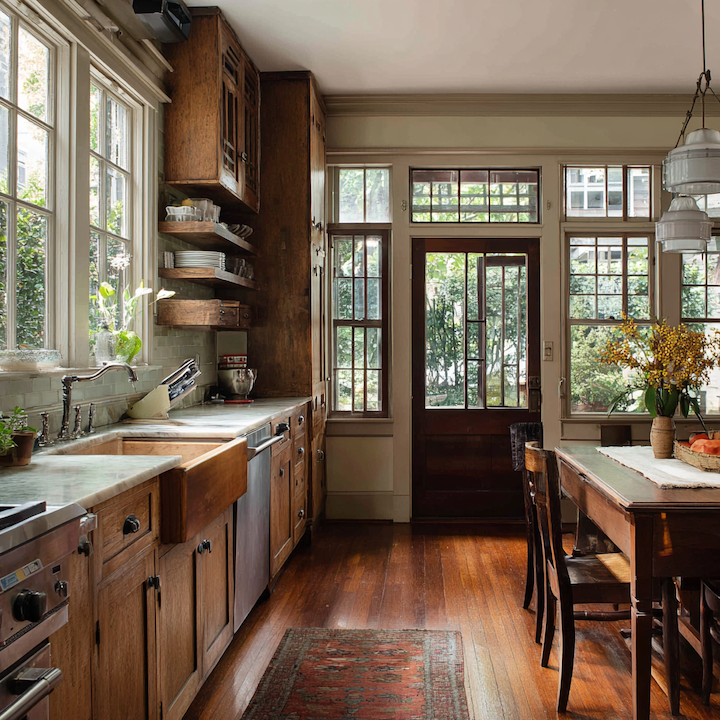
Three quotes for fifteen windows sat spread across a kitchen counter in Midtown. $8,200, $18,500, and $32,000. Same house. Same fifteen windows.
The Frame
The trim came off a dining room window in a 1940s Midtown bungalow. From inside, the frame looked solid. The contractor pressed a flathead into the sill and it sank half an inch.
"That's rot," he said. "You can't see it until the trim's off."
The homeowner stepped back. "I've been caulking that sill for three years. Three years of caulk and it was rotting the whole time?"
"Caulk buys you time. It doesn't fix structure." He pulled a piece of soft wood free and held it up. "Insert replacement keeps the existing frame. It runs $400 to $600 per window. Works fine when the frame's sound." He set the piece on the countertop. "But when there's rot underneath, you need full-frame. Everything comes out down to the rough opening. That's $600 to $1,200 per window, but you get proper insulation and flashing behind it."
"So the $8,200 quote assumed none of this existed."
"Any contractor who quotes insert without pulling trim on a house this age is guessing. Some guesses work out. This one wouldn't have."
Insert replacement runs $400 to $600 per window when the existing frame is sound. Full-frame runs $600 to $1,200 per window and addresses hidden rot, failed insulation, and improper flashing. The difference between the two is invisible until the trim comes off.
The Glass
A woman in East Memphis opened her July power bill and set it on the table. $380. Her neighbor across the street, same square footage, same HVAC age, paid $240.
"I've replaced filters, I've had the ducts cleaned, I've done everything the internet told me to do," she said. "A hundred and forty dollars a month and I can't figure out where it's going."
The contractor held his hand six inches from the living room window. "Feel that?"
She held her palm next to his. Warm air radiated through the glass.
"Low-E glass," he said. "Your neighbor's got it. You don't. It has a microscopic coating that reflects heat back outside while letting light through. Costs $25 to $50 more per window than basic double-pane. But it cuts cooling costs 15 to 25 percent. In a Memphis summer, that's the $140 you've been looking for."
"What about triple-pane? I keep seeing that online."
"Adds another $100 to $200 per window. Makes sense for rooms with heavy noise exposure or direct afternoon sun. For most of the house, double-pane Low-E is the sweet spot." He pointed toward the west-facing bedroom. "That room, though? Triple-pane would pay for itself in two summers."
She looked at the bill again. "I almost replaced the HVAC. That's $8,000 I nearly spent on the wrong thing."
"And you can stop replacing filters every month."
Low-E glass costs $25 to $50 more per window than basic double-pane and cuts cooling costs 15 to 25 percent in Memphis summers. Triple-pane adds $100 to $200 per window for noise reduction and extreme sun exposure.
What the Quote Doesn't Show
Window removal started on a 1972 ranch in Colonial Heights. The first three openings came out clean. The fourth had dark staining behind the frame. The fifth had a layer of peeling white paint under the exterior casing.
The homeowner watched from the hallway. "None of this was in the estimate."
"It can't be," the contractor said. He scraped a fingernail across the exterior casing and held up a paint chip. "That's lead. Anything built before 1978 is a possibility." He set the chip on a piece of tape. "Lead paint compliance adds $50 to $100 per window. EPA requires certified work practices during removal. Midtown, Vollintine-Evergreen, Colonial Heights -- older Memphis neighborhoods almost always trigger it."
"And the dark one?"
He pressed a moisture meter against the sheathing. "Eighteen percent. That's rot starting." He moved to the next opening. "This one's fine. See the difference?" She leaned in. The wood was dry and light-colored. "Rot repair runs $100 to $300 per window, depending on how deep it goes."
"What about the upstairs bedroom windows?"
"Second-story work runs 20 percent more. Ladder setup, safety requirements, slower pace." He pointed at the two bathroom windows. "And those are custom sizes. Non-standard dimensions add 20 to 40 percent over standard."
She stared at the moisture meter reading for a moment. "I wish someone had told me any of this was possible before I signed the first quote."
"Any honest contractor will tell you there's a range. The ones who give you a hard number before pulling the first window are selling, not building."
Rot repair adds $100 to $300 per window. Lead paint compliance adds $50 to $100 per window on pre-1978 homes. Second-story work runs 20 percent more. Custom sizes add 20 to 40 percent. None of it shows up until the old windows come out.
All at Once or in Phases
An owner of a brick foursquare in Cooper-Young had 18 windows to replace. She'd set aside $12,000. The contractor walked the house with her, opening and closing each window, pressing frames, checking operation.
"Fourteen move fine," he said. He stopped at a south-facing bedroom window and tried the sash. It didn't budge. "These four are painted shut. And the two in the kitchen have failed seals -- see the haze between the panes?"
She ran a finger along the clouded glass. "So those six are the priority."
"Start with south and west-facing. That's where the energy loss is worst. Biggest return per dollar. Do those six now, the rest next year."
"How much more does phasing cost?"
"Ten to 20 percent more per window. Repeated setup, remobilization, separate material orders. On 18 windows, that's real money." He pulled up the numbers on his tablet. "But here's the math that might make it work. TVA EnergyRight offers rebates on qualifying window installations. You have to use a contractor from their Quality Contractor Network, and the windows have to meet their efficiency standards, but it offsets some of the phasing penalty."
"What about the federal tax credit? I keep seeing that online."
"That expired at the end of 2025. If you'd done this last year, you could've claimed up to $600 per year through Section 25C. That window closed December 31."
She looked at the six worst windows again. "So the rebate is what's left."
"TVA rebates and Tennessee's IRA Home Energy Rebate program, which is expected to launch later this year. Between those and doing the worst offenders first, phasing makes financial sense when the alternative is waiting until you can afford all 18 and losing another year of energy savings."
Phasing costs 10 to 20 percent more per window from repeated mobilization. TVA EnergyRight rebates help offset that through qualifying contractors. The federal Section 25C credit expired December 31, 2025.
The Contractor Question
A woman in Vollintine-Evergreen had 14 windows replaced two summers before. The crew finished in a day and a half. By November, three windows had condensation between the panes and two wouldn't lock. The company answered the phone once, sent someone who caulked the exterior, and stopped returning calls.
She'd done what most people do. She searched online, read reviews, picked the company with the most stars and the best price. The photos looked professional. The warranty language said "lifetime." The estimate was free, which meant four salesmen in her living room before she picked one.
She wanted to do it right this time. But every window company looked the same online. Same stock photos of smiling installers. Same warranty promises. Same "free estimate" buttons that meant strangers competing for her phone number.
That's the gap this platform exists to close.
Every window contractor on this platform carries an active Tennessee Board for Licensing Contractors license with a monetary limit of $25,000 or higher. They carry $100,000 in general liability insurance and workers compensation for every crew member. Their references have been called, not just collected. Their license was verified directly with the state. And they were vetted in person by someone with more than two decades in Memphis construction.
That's the part that doesn't show up in a Google search.
The estimator on this page runs without collecting a name, email, or phone number. Browse prices, adjust options, run it ten times. Contact information is only requested at the end, and only if you choose to connect with a contractor. Nothing is stored, nothing is sold, nothing is shared unless you decide to take the next step.
A typical Memphis home with 15 to 20 windows costs $6,400 to $16,000 for replacement, depending on frame condition, glass specification, and hidden repairs.
Window projects connect to the building envelope. New windows often pair with siding replacement for a unified exterior, and entry doors frequently get upgraded at the same time. Proper insulation around new frames prevents energy loss. Trim and casing benefit from exterior painting, and better-sealed windows reduce the load on your HVAC system. When improperly installed windows cause water intrusion or an insurer denies a storm damage claim covering broken seals, a construction attorney can assess whether the contractor's workmanship or the carrier's denial is the real problem.