Posts Rot Where Nobody Looks
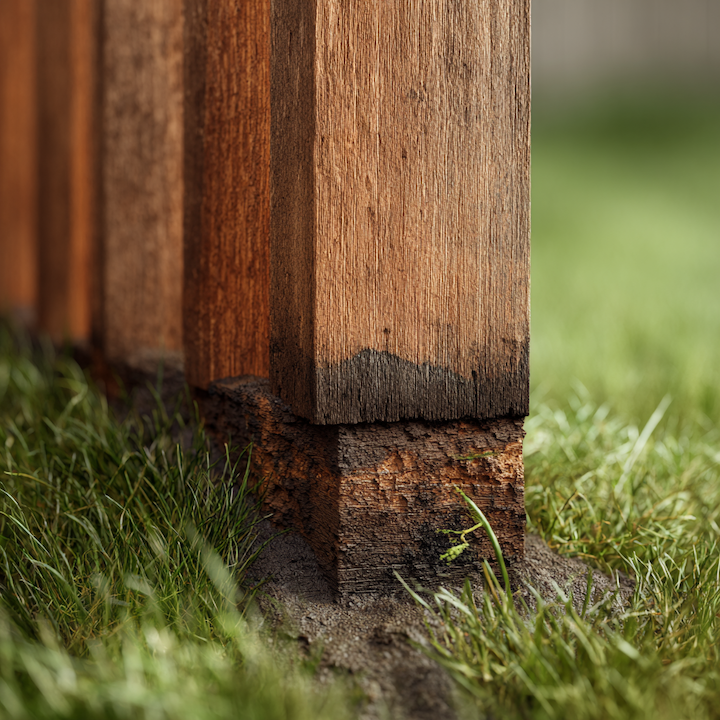
Memphis clay holds water against everything it touches. Fence posts rot at grade level while the pickets above them look fine from the yard. Property lines drift in neighborhoods where surveys were skipped decades ago. And two contractors can look at the same backyard, measure the same 200 linear feet, and come back with numbers $3,000 apart.
Nobody's lying. That's the hard part.
Fence installation in Memphis runs $15 to $85 per linear foot depending on material, post construction, height, and terrain. A 200-foot wood privacy fence lands between $4,200 and $5,900. The same footage in vinyl runs $6,700 to $9,400. Wrought iron pushes past $60 per linear foot and climbs from there.
The spread comes from what's underground, what grade of lumber is in the stack, and whether anyone checked the property line before the first post went in.
The Posts
A contractor in Cordova got called out for a second opinion. The homeowner met him at the gate, arms crossed.
"The fence company I hired last year says the whole thing needs replacing," she said. "Eight thousand dollars. It's three years old."
He put his hand on the top rail and pushed. The whole section swayed.
"Feel that?"
She put her hand next to his. Her face changed.
"It's moving."
"Posts." He crouched down where the 4x4 met the ground and pressed his thumb into the wood. It sank in like wet cardboard. "Rotted at grade. Right where the wood sits against the dirt." He stood up and wiped his hand on his jeans. "Everything above this line is fine. Pickets, rails, all good. But the posts turned soft where the moisture sat against them year after year."
She crouched down where he'd been and touched the wood herself. Her thumbnail went right in.
"That's three years old," she said quietly. "I watched them pour the concrete."
"Concrete doesn't help when the wood's sitting in a bathtub." He pointed at the grade line. "Water pools right here. Clay won't drain it. The concrete just holds the post in place while it rots."
"I've been sick about this for three weeks. Eight thousand dollars on a fence I just paid for."
"The company that came out wasn't trying to take advantage of you. When the posts go, the whole section moves, and a moving fence looks like it's done from the yard." He put his hand on the next section. Solid. "But you've got three bad posts out here. Not a bad fence."
"Three posts." She stood up and looked down the fence line. "What does three posts cost?"
"Four fifty to nine hundred, depending on whether we bracket or bury. Not eight thousand."
She closed her eyes for a second.
"So it's not the fence," she said. "It's what's holding it up."
"That's Memphis clay for you. Holds water right against the wood. Post looks solid from the yard while the part underground turns to pulp."
A 4x4 post needs to go 24 to 30 inches deep for a 6-foot fence. Shallower posts lean within a few years, especially in clay that expands and contracts with every rain. Some installers now use metal post brackets that keep the wood above grade entirely. Costs more up front. Lasts twice as long.
Everything above the ground was waiting on what happened below it. But posts are only half the equation. The lumber between them is where the real money hides.
The Wood
A homeowner in Bartlett had two quotes for 180 linear feet of 6-foot privacy fence. Same height. Same dog-ear style. Same backyard.
$4,200 and $6,800.
She'd called the more expensive contractor to ask him why.
"Walk me through the difference," she said. "Because from where I'm standing, it's the same fence."
He pulled out his materials list. "The other bid's a standard build. A lot of fences go up that way." He set the first sheet down. "His quote is #2 grade pressure-treated pine, 4x4 wood posts in concrete, 2x3 rails." He turned the page toward her. "Mine is #1 grade cedar, metal post brackets, 2x4 rails, and a thicker picket."
"I wouldn't know the difference looking at it."
"You wouldn't. Not from the curb. Not the first year." He set his pen down. "The #1 grade costs 20 to 30 percent more, but it holds its look. The cedar resists rot on its own without the chemical treatment. The 2x4 rails don't flex like 2x3s. And the metal brackets mean the posts never touch dirt."
"So I'm paying twenty-six hundred more for something I won't see until it's too late."
"That's the thing about fences. Nobody thinks about them until they're leaning."
She looked at the two sheets of paper side by side. "My neighbor did hers two years ago. Cheapest bid. It already has a bow in the middle section."
"Two-by-three rails." He didn't even ask. "They flex under their own weight once the wood swells. Memphis humidity gets into everything."
"Year five, his fence starts showing it. Year eight, you're looking at replacing sections. Mine's still standing."
She looked at the number again. "So the twenty-six hundred is hiding in the parts I can't see."
"That's where it always hides."
She stared at the two sheets of paper for a long time.
That $2,600 wasn't a markup. It was a decade.
Wood privacy fencing in Memphis runs $21 to $30 per linear foot installed at standard 6-foot height. Board-on-board construction, which overlaps pickets so there's no gap when viewed straight on, adds 15 to 20 percent because it uses more lumber. Nobody sees the overlap from the street. Everyone sees the gap.
Board-on-board, cedar, pressure-treated -- the choices multiply. Some homeowners look at the staining schedule and start asking about materials that don't need one.
Vinyl and Metal
A contractor pointed at a white vinyl fence as he and a homeowner drove through a Germantown neighborhood.
"That one went up twelve years ago," he said. "I know because I quoted against it."
"You lost the bid?"
"I quoted wood. Other company quoted vinyl. Homeowner went vinyl." He slowed the truck. "Look at it. No painting, no staining, no replaced boards. Looks the same as the day it went in."
"Twelve years." She stared at it as they rolled past. "I've already picked wood. You're telling me this now?"
"I'm telling you because you should see what both look like after a decade before you sign anything." He pulled away from the curb. "Most people come in wanting wood. Nothing wrong with that. But they deserve the full picture."
"What's the full picture cost me?"
"Vinyl runs 50 to 60 percent more than wood up front. A 200-foot privacy fence in vinyl is $6,700 to $9,400 installed. Same footage in wood runs $4,200 to $5,900."
She did the math in her head. "That's an extra twenty-five hundred at least."
"That's a big gap just to skip the staining."
"Is it?" He turned onto the main road. "Wood needs staining or sealing every two to three years. That's $500 to $1,000 every round. Do that math over twelve years. The wood catches up to the vinyl price and passes it -- and the vinyl's still standing there looking the same."
"And I'd stop buying stain."
"You'd stop buying stain."
The real cost of a fence is the one that comes after the install.
Vinyl privacy fencing runs $34 to $47 per linear foot installed. Aluminum and steel serve a different purpose entirely -- pool code compliance, decorative borders, security without blocking sightlines. They run $35 to $60 per linear foot installed. Last decades with zero maintenance. But they don't give you privacy. That's a different conversation.
Neither vinyl nor metal answers the question most homeowners forget to ask before any fence goes up: whose land is it sitting on?
Property Lines
A homeowner in East Memphis told the contractor his story before the tape measure even came out.
"I got a call from my neighbor's attorney," he said. He was standing in his backyard, hands in his pockets, looking at a fence he'd maintained for eight years. "Neighbor's selling. Got a survey done for the listing. Turns out my fence is two feet over the property line."
The contractor walked to the back corner and knelt where the fence met the side yard. He brushed the dirt away from the base of the post with his boot, looking for a survey pin. Nothing.
"There should be an iron pin right here," he said. "Or a mag nail in the sidewalk. Something."
"I've never seen one."
The contractor looked at the fence, then at the yard. "You built it?"
"No. It was here when I bought the house. I just assumed it was on the line." He kicked at the base of a post. "I've replaced boards, rebuilt a whole section after that storm in '22. Eight years of maintaining a fence on somebody else's land."
"Survey?"
"Never got one. Nobody told me I needed one."
The contractor pulled a tape measure from his belt and ran it from the corner post to where the property pin should have been. "Two feet. Over eight years." He stood up. "On a 200-foot run, that's 400 square feet of your neighbor's yard sitting behind your fence."
"Four hundred square feet." The homeowner's jaw tightened. "And his attorney knows it."
"How much is the neighbor asking you to move it?"
"He's not asking. His attorney is. Two feet back, at my expense."
"What did the fence cost you in repairs over eight years?"
"Two, maybe three thousand. Not counting the hours."
The contractor shook his head. Not at the homeowner. At the situation.
Surveys cost $300 to $500 for a typical residential lot in Memphis. That man spent eight years and thousands of dollars maintaining a fence that wasn't his to maintain. Then paid to move it.
A $400 survey prevents a $4,000 mistake. The survey comes before the fence quote. Every time.
Even homeowners who know exactly where their property ends eventually face a different question: how much of their existing fence is actually worth keeping?
Repair or Replace
A buyer in Collierville sat across from the contractor at her kitchen table three days before closing. She had a seller's credit offer and a question.
"He's offering $3,000 toward replacing the fence," she said. "Two hundred feet. I need to know if that's fair before I sign."
"Have you walked the line?"
"I looked at it from the patio."
He shook his head. "Let's go look."
They walked it together. He tested posts, checked rails, pushed on sections. Most of the fence was solid. About 40 feet along the back property line sagged where two posts had failed.
"This section here." He grabbed the top rail and pulled. It tilted toward him. "Both posts are gone." He let go and moved to the next section. Pushed it. Nothing. "But from here to the corner, it's tight. Rails are solid. Pickets aren't cupping."
"The home inspector said the fence was in poor condition."
"He saw it from the yard." The contractor wasn't dismissive. "From the patio, you see the sag. Up close, you see the sag is forty feet out of two hundred."
"Full replacement on 200 feet of wood privacy would run about $5,000," he said. "But you don't need full replacement. You need about 40 feet of work. That's about $1,500."
She did the math. "So I take the $3,000, fix the 40 feet, and keep the difference."
"That's what I'd do."
She set down her pen. "The seller's agent told me the whole thing needed to come down."
"Seller's agents aren't fence contractors." He said it without edge. "Forty feet is failing. A hundred and sixty feet is fine. Replacing all of it because part of it leans is like repainting a house because one wall faded."
She picked the pen back up and circled the $3,000 on the credit offer. "I almost told him it wasn't enough."
"It's more than enough. You just needed someone to walk the line first."
Post replacement runs $150 to $300 per post including labor. Section replacement costs $25 to $40 per linear foot. Individual pickets run $5 to $15 each.
The worst section isn't the whole fence. It rarely is. But knowing the difference between what's failing and what's standing requires someone willing to walk every foot of the line.
The Contractor Question
I watched a couple in Bartlett do everything right last spring. Three quotes. Three companies with websites and five-star reviews. Professional trucks. Salesmen who said all the right things about materials and timelines.
They still had no way to know.
No way to tell which crew would answer the phone in January. No way to know if the installer actually carried workers comp or just said he did. No way to verify a license number they wouldn't think to ask for.
That's the gap this platform exists to close.
The fence contractor connected through here holds an active Tennessee Board for Licensing Contractors license with a monetary limit of $25,000 or higher. They carry $100,000 in general liability insurance and workers compensation for every crew member on the site. Their references were called, not collected. Their license was verified directly with the state. They were vetted in person by someone with more than two decades in Memphis construction.
That's the part that doesn't show up in a Google search.
Most estimator sites work by collecting your contact information and selling it to three to five contractors who then compete for your business with aggressive follow-up calls. This platform works differently. When you request a contractor introduction, we match you with one fence installer whose licensing, insurance, and work history have already been verified. One contractor, one homeowner, one conversation. No bidding wars and no phone spam.
The estimator itself requires nothing from you. No account creation, no email address, no phone number. Run as many estimates as you want, adjust the linear footage, compare wood against vinyl against aluminum -- all of it happens in your browser using current Memphis pricing data. Your information stays yours until you decide otherwise. The only time we ask for contact details is when you choose to connect with a verified contractor for a formal bid.
Fence projects connect to backyard improvements. New fences pair naturally with decks for defined outdoor living. Concrete patios anchor the space. And fencing is required for pool installations in Shelby County. Wood fences benefit from staining at the same time as exterior painting. Property line work sometimes uncovers siding damage hidden by old fencing.