 Gardner Construction. Memphis, Tennessee.
A Tile Job That Became a Structural Job
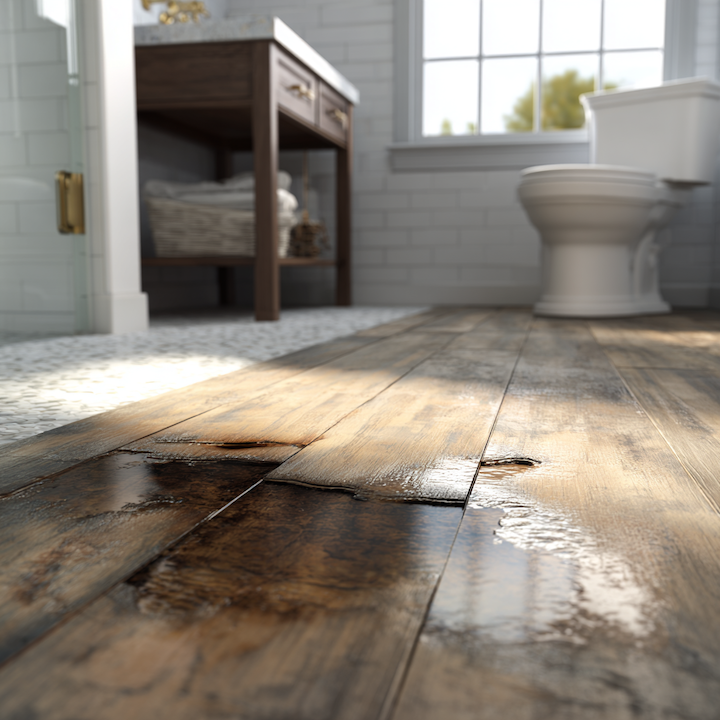
I was standing in a Cordova bathroom when the contractor's pry bar caught under the edge of the vinyl. The flooring came up soft. He knelt on what should have been solid subfloor, and his knee sank.
The stain spread from the toilet flange in a dark bloom, years of small leaks absorbed into plywood that had given up being wood. The homeowners stood in the doorway watching a man they'd hired for tile and a vanity discover something that changed the entire job.
They'd budgeted $8,000. They'd lived over this damage for a decade without knowing. That's the thing about bathrooms in Memphis. The scope you plan for and the scope that's actually there are rarely the same number.
Bathroom remodels in this city run from $10,000 for a cosmetic refresh to $90,000 or more for a full gut. Demo and haul-off on a gut job runs $2,000 to $5,000 before a single fixture goes in. Subfloor damage, outdated plumbing, and electrical that doesn't meet current code add scope that wasn't in the original conversation. What follows is how those numbers break down, what drives them apart, and what a Memphis homeowner should understand before the first tile comes off the wall.
The Crack at the Corner
The grout in the Germantown shower had cracked at the corners where the walls met the tub. Hairline fractures, easy to miss. The homeowner ran her finger along the line where the tile met the tub surround.
"I've been caulking over this twice a year," she said. "It keeps coming back."
The contractor knelt at the tub deck and pressed his thumb against the tile above the crack. It gave.
"That's not a grout problem," he said. "Water's been wicking behind here for years. Doing quiet work in the dark." He rapped his knuckle against the tile six inches higher. Solid. Rapped it again at the corner. Hollow.
"So the caulk was never going to fix it."
"The caulk was fine for what it was. It just wasn't treating what was actually wrong." He stood and looked at the shower floor, the walls, the ceiling. "If the backer board behind this tile is still solid, we're looking at a mid-range remodel. New tile on the floors, new tile in the shower, a vanity that wasn't bought at a closeout sale. $20,000 to $50,000, and most of it goes to the tile setter who spends two weeks on hands and knees making sure water stays where it belongs."
She looked at the hollow spot on the wall. "And if it's not solid?"
"Then we're having a different conversation. Full renovation. $38,500 to $90,000 or more, and the house loses a bathroom for a month while plumbers and electricians and tile crews take turns."
"I've spent $60 a year on caulk for this," she said. "Seven years."
"Four hundred and twenty dollars," the contractor said. "And the damage behind the tile kept growing every one of those years."
"What if we'd caught it the first time it cracked?"
"Cosmetic refresh," he said. "New vanity, new toilet, paint and mirrors and towel bars. $10,000 to $26,000, and the bathroom looks different by Friday. That's the budget that works when nothing underneath has failed."
She stared at the corner where the caulk had cracked again. "And I can stop buying caulk."
"You can stop buying caulk."
A cosmetic refresh runs $10,000 to $26,000. A mid-range remodel runs $20,000 to $50,000. A full renovation runs $38,500 to $90,000 or more. The scope of the project depends entirely on what the surface is hiding. And the only way to know what the surface is hiding is to look behind it.
What Lives Under the Floor
The subfloor in the East Memphis bathroom had been soft for years. Nobody noticed because the vinyl covered it and the vanity covered the vinyl. The contractor pulled back the flooring and pointed at the dark ring around the toilet flange.
"See that," he said. "Wax ring failed. Every flush sent a little moisture into the plywood."
The homeowner crouched next to him. "We replaced that toilet three years ago. The plumber said everything looked fine."
"It probably did, from above." The contractor pressed a screwdriver into the wood two feet from the flange. It sank without resistance. "He set a new wax ring on damaged plywood. The seal held. The wood underneath didn't."
"How far does it go?"
He moved the screwdriver in a slow arc, pressing every few inches. Solid, solid, solid, then soft again near the tub drain. "Two areas. The flange and the tub."
"So the plumber wasn't wrong."
"He wasn't wrong about what he did. He was wrong about what he didn't check." The contractor pulled a moisture meter from his bag and held it against the subfloor at the edge of the damage. The display read 31%. "When it's just plywood, $500 to $2,000," he said. "Cut out the damaged sections, sister in new plywood, and you've got a solid floor to tile on."
"And when it's not just plywood?"
He pointed the screwdriver at the edge where the subfloor met the joist. "This has reached the framing. Joist damage adds $1,500 to $4,000. Memphis humidity accelerates everything once moisture finds a way in. This didn't happen in a month. This took years."
"We had no idea," she said. "We walk on this floor every morning."
"Nobody does," he said. "A supply line weeps at the fitting, humidity does the rest. The rot spreads slowly. In a house this old, the real scope hides under the surface."
Subfloor repair runs $500 to $2,000 for plywood. Joist damage adds $1,500 to $4,000. Structure is the first thing a remodel has to address and the last thing most homeowners expect to pay for. But once the subfloor is sound, the question becomes what goes on top of it.
Tile
The porcelain in the Bartlett showroom looked the same as the ceramic next to it. Same color, same size, same sheen under the fluorescent lights. The homeowner picked up one of each and turned them over.
"I can't tell the difference," he said. "But one costs twice as much."
The contractor took the ceramic tile and held it edge-up under the faucet at the display sink. Water beaded on the surface but the edge darkened slightly where it absorbed into the body of the tile.
"See that," he said. "Ceramic absorbs water. Slowly, through the body. Fine for a kitchen backsplash. Less fine for a shower floor where bare feet stand in pooling water every morning."
He held the porcelain tile under the same faucet. The edge stayed dry.
"Fired hotter," he said. "Denser. Nearly impervious. $4 to $15 per square foot for material on either one. Porcelain costs more because it forgives more, and in a wet room, that forgiveness matters."
"My wife picked the ceramic," the homeowner said. "She liked the color."
"That color comes in porcelain too. The extra cost is in the kiln time, not the design. And in 10 years, when the grout has been wet and dry a thousand times, the tile that didn't absorb any of that moisture is the one still doing its job."
The homeowner set both tiles back on the display. "What does the labor run?"
"$8 to $15 per square foot regardless of what's being set," the contractor said. "Your bathroom has maybe 75 square feet of tile between floors and walls and the inside of the shower. The hands doing the work often cost more than the boxes of tile stacked in the garage."
He paused. "The tile setter is the person your remodel depends on most. Two weeks on hands and knees, cutting around drain flanges and valve bodies, getting every joint straight so water sheds toward the drain instead of sitting in a low spot. That's the trade where the difference between $8 and $15 a square foot shows up on your shower floor 5 years from now."
Tile material runs $4 to $15 per square foot. Labor runs $8 to $15 per square foot regardless of material. Tile is the surface the homeowner sees every day. But the things mounted to those surfaces, the fixtures that deliver and drain the water, carry their own cost conversation.
Fixtures
Memphis water leaves its signature on everything. The showerhead in the Midtown bungalow had calcified into a single stream, most of the jets clogged with mineral deposits. The contractor twisted the old faucet cartridge. It wouldn't move.
"Fused into the valve body," he said. "Plastic cartridge instead of ceramic. That's what builder-grade gets you. Somebody saved $40 on this faucet 12 years ago and now the whole valve assembly has to come out."
The homeowner leaned against the doorframe. "We've been living with low water pressure for two years. I thought that was just what old houses do."
"Old house has nothing to do with it." He pulled the cartridge housing free and held it up. The inside was coated white. "This is calcium. Memphis water is hard enough to build up like this in a decade. A ceramic cartridge resists it. A plastic one surrenders to it."
"How much are we talking for a decent faucet?"
"Faucet and shower valve, $200 to $800 for mid-range," he said. "The ones that last have ceramic disc cartridges and solid brass bodies underneath the chrome. A callback to replace a failed cartridge runs $175 to $250 in labor alone. The cheap units need one sooner."
"What about the toilet? Ours runs constantly."
"That's a $12 flapper," he said. "But if you're already doing the remodel, this is the time to replace. $150 to $400 for the ones contractors install in spec houses. $400 to $800 for mid-range models that flush with authority and don't clog on the first test." He flushed the existing toilet. It swirled weakly. "Hear that? That's a 3.5-gallon flush valve trying to do its job through a partially calcified supply line. The new ones use 1.28 gallons and flush harder."
"And the vanity?"
"$300 to $6,000 depending on whether it came flat-packed or built by someone who cares." He opened the vanity door below the sink and pointed at the bottom panel. The particleboard had swelled where water had splashed over the years. "The cheap ones do this. The good ones still look right after a decade of wet towels and humid mornings."
She looked at the swollen panel. "I've been putting a towel under there to catch the drips."
"You won't have to do that anymore."
Toilets run $150 to $800. Vanities run $300 to $6,000. Builder-grade fixtures cost less because they're made to a price, not a lifespan. Fixtures are individual decisions. But the biggest fixture decision in a bathroom remodel isn't about faucets or toilets. It's about the tub.
The Tub Question
The Collierville couple stood in their primary bathroom, the one with the builder-grade tub they'd never once filled. A walk-in shower made more sense for how they actually lived.
"It's the only tub in the house," the contractor said.
"We never use it," she said.
"You don't," he said. "But the young family who tours this house in 7 years will be looking for one. The toddler who needs a bath. The offer that doesn't come because a basic expectation wasn't met."
Her husband looked at the tub. "What are we talking about, cost-wise?"
"If the tub is sound, refinishing costs $300 to $600 and buys another 5 to 10 years," the contractor said. "If there's cracking through the body or drainage issues, replacement runs $1,500 to $4,000 for a standard alcove unit."
"And if we go ahead with the shower?"
"Converting to a walk-in shower runs $3,000 to $8,000. Custom tile with frameless glass runs $6,000 to $15,000, and the glass alone can be a third of that." He ran his hand along the tub deck. "This is a cast iron tub under the enamel. Somebody spent money on this house at some point. They just put a builder-grade surround around a quality tub."
The wife crossed her arms. "So we keep it."
"I'd keep one tub in the house," he said. "That's what I tell everyone. If you have two bathrooms and only one tub, that tub stays. Refinish it, re-tile the surround, and put the walk-in shower in the master if you want one."
"And we save $6,000 on glass we don't need."
"You save $6,000 on glass and you keep the resale value of a house with a tub."
Tub replacement runs $1,500 to $4,000. Shower conversion runs $3,000 to $8,000. Custom tile with frameless glass runs $6,000 to $15,000. Every one of these decisions, the tile, the fixtures, the tub, adds days to the timeline. And the timeline is the part of a bathroom remodel that surprises people most.
Timeline
The family blocked out the week before Thanksgiving. Simple remodel, the contractor said. 5 days, maybe 6. They'd have the bathroom back for the holiday.
On day 3, the tile setter pulled up ceramic that had been laid on drywall instead of cement board. The drywall was damp. Not rotted, but too wet to tile over.
"Tile took longer than I estimated," the contractor told them the following week. "Not because of the drywall. That was a half day to replace. It's that thin-set needs to cure before grout. Grout needs to cure before sealing. And the vanity that was in stock when you ordered it wasn't in stock when the truck arrived."
The homeowner dried her hair at the kitchen sink. "How much longer?"
"Week before Christmas," he said.
"We planned Thanksgiving around having this bathroom back."
"I know. And I'm sorry about the timing. But rushing the cure times means the grout cracks in 6 months and we're back in here doing it again."
They showered at the gym through December. The contractor brought them a gift card for the gym on the day he finished.
"A cosmetic refresh takes 3 to 5 days when nothing goes wrong," the contractor said when they settled up. "A mid-range remodel like yours takes 2 to 3 weeks, most of it waiting for tile to cure. A full renovation takes 4 to 8 weeks, longer if permits are slow or custom materials have lead times."
"And the permits?"
"$225 to $625 in Memphis. Plumbing changes need their own. Electrical additions need their own. I handle the paperwork. The weeks without a working bathroom are the part nobody warns about."
"Somebody should," she said.
"That's what I'm doing right now."
A cosmetic refresh takes 3 to 5 days. A mid-range remodel takes 2 to 3 weeks. A full renovation takes 4 to 8 weeks. Permits run $225 to $625. The timeline assumes the right contractor with the right crew. Finding that contractor is a different problem.
The Contractor Question
I knew how this part usually goes. The couple in Cordova found the subfloor damage on a Tuesday. By Wednesday they had three bids from contractors who found them through a lead service. One never showed. One quoted without looking under the vanity. The third had a suspended license and a website full of stock photos.
That's the gap this platform exists to close.
Their next contractor got vetted before his name went anywhere near a homeowner. Someone sat across the table, looked at his work, called every reference on the list. His Tennessee contractor license was active and clean with the Board for Licensing Contractors, classified at a monetary limit of $25,000 or higher. General liability insurance of $100,000 or more. Workers compensation for every crew member. References called, not collected. License verified directly with the state. Vetted in person by someone with more than two decades in Memphis construction.
They didn't know any of that. They just knew their bathroom got finished.
That's the part that doesn't show up in a Google search. One contractor, not five. Vetted in person, not scraped from a directory.
Bathroom projects often connect to broader home improvements. A bathroom remodel pairs naturally with kitchen renovations when updating an older home. Flooring in adjacent hallways often gets replaced at the same time, and plumbing upgrades discovered during demo can affect the whole house. Vent fan additions and GFCI circuits require electrical work. Walls and trim need fresh paint once tile and fixtures are set. When hidden water damage behind tile leads to a dispute over who's responsible for the rot, or a contractor's work doesn't meet code and the city won't sign off, a construction attorney can clarify where the liability falls.