Everything Renovated Except the Panel
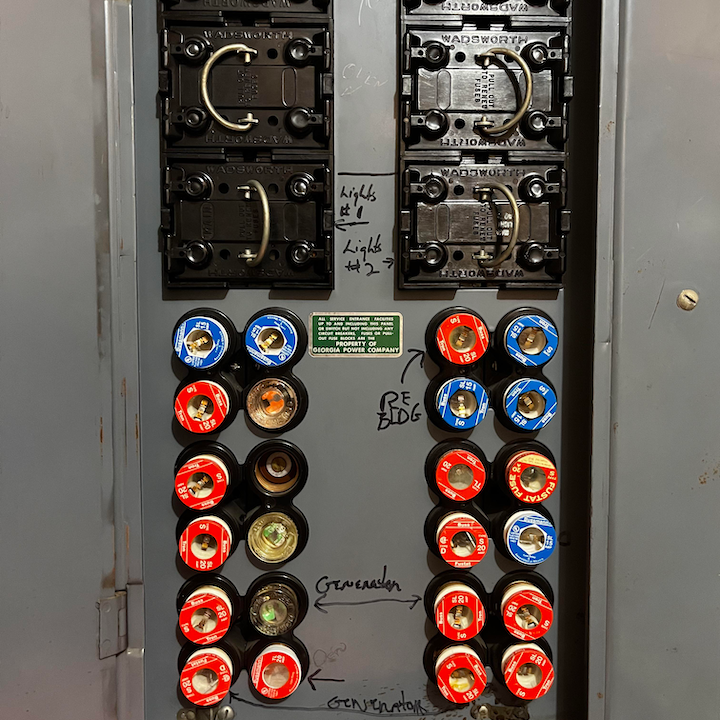
A 1962 bungalow in Midtown Memphis sits on a block where the oaks are older than the wiring. The kitchen was gutted and rebuilt two years ago. The roof went on last spring. The hardwood floors were refinished before the listing photos went up. The home inspection report came back with one flag: original 60-amp fuse panel, never upgraded.
The listing said completely updated. The kitchen was updated. The roof was updated. The electrical system hadn't been touched in sixty years.
Electrical work in Memphis runs $460 for a single new circuit to $24,190 for whole-house rewiring. Panel upgrades fall in the $1,790 to $4,230 range. But the real cost depends on what the electrician finds when they open the panel and trace the wiring back to its source.
That spread between $460 and $24,190 is really a spread between what someone found and what someone missed. And the panel is always the first thing an electrician opens.
The Panel
An electrician opened a panel in a Bartlett ranch while the homeowner stood behind him, arms crossed, skeptical.
"Twenty-three years in this house," the homeowner said. "We raised two kids here. We've never had a single problem."
The electrician didn't answer right away. He pulled the dead front cover off and shone his light inside. Then he stepped back.
"Come look at this."
The homeowner leaned in. "What am I looking at?"
"Federal Pacific breakers." He pointed to the bus bars. "See these marks? Scorch marks. These breakers have been overheating without tripping. They're supposed to cut power when something goes wrong. These didn't."
"But nothing ever happened."
"That's not the same as nothing ever went wrong." He set the panel cover on the dryer. "Federal Pacific and Zinsco panels from the '70s have documented failure rates. Insurance companies flag them. Some won't write a policy until they're replaced."
The homeowner looked at the panel, then back at the electrician. "We just renewed our homeowner's policy six months ago. Nobody said a word about the panel."
"They don't open it during underwriting. They flag it during a claim." He let that sit for a moment. "If something happens and they find this panel, you're in a conversation you don't want to have."
"Twenty-three years." He stared into the panel. "How much to fix something I didn't know was broken?"
"A 200-amp panel upgrade in Memphis runs $1,790 to $4,230. Depends on whether the meter base needs replacing, whether MLGW has to disconnect and reconnect, and how much existing wiring needs rework to meet current code."
The homeowner ran his hand along the top of the dryer. "And I can stop worrying about the insurance?"
"You can stop worrying about the insurance."
A 200-amp panel upgrade in Memphis runs $1,790 to $4,230 depending on home size, age, and whether the meter base and service entrance need replacement. Replacing an existing 100-amp panel without upgrading the service runs $1,130 to $2,580.
The panel that looks fine from the outside is the one that costs the most to fix. But even a new panel only controls what's connected to it. The wiring behind the walls is a different question entirely.
Old Wiring
An electrician had been called to an East Memphis ranch to add a circuit for a home office. Straightforward job. The panel was modern, the outlets worked, the inspector had given it a clean report when the homeowner bought the place.
He pulled the cover off the panel and started tracing runs.
"When was this house rewired?" he asked.
"Sometime in the '90s, I think," the homeowner said. "That's what the seller's disclosure said. We had it inspected before we closed."
The electrician reached into the wall behind the panel and pulled out a length of wire. The insulation was cloth, not plastic. He held it up.
"This is original 1958 wiring," he said. "Cloth-wrapped copper."
"But the panel's new."
"The panel's new. The visible runs are new." He set the wire down carefully. "Everything behind drywall is from the Eisenhower administration. The rewire only replaced what you could see."
The homeowner looked at the wire on the counter. "My daughter's room is right above this wall. Should I be worried?"
"You're right to ask." He pointed at the cracked insulation. "Cloth wrapping degrades over decades. Gets brittle, cracks, exposes bare copper. In a Memphis attic that hits 140 degrees in July, the deterioration accelerates." He paused. "It's not automatically dangerous. But it's not what you thought you had."
"The house we almost bought in Cordova, the inspector flagged aluminum wiring. Scared us off. Is that what this is?"
"Different issue, and you weren't wrong to walk away from that one if nobody had addressed it. Houses built between '65 and '73 often have aluminum branch circuits. The aluminum itself is fine. The connections oxidize over time and generate heat. The fix isn't rewiring. It's installing special connectors at every outlet, switch, and junction. That runs $50 to $100 per connection point."
She looked at the panel. "This house has to have forty, fifty outlets and switches."
"At least. A home with 40 connection points would run $2,000 to $4,000 for the aluminum remediation alone. But your issue isn't aluminum. It's the cloth wiring behind finished walls."
"So the inspection missed it."
"The inspection caught what was visible. Nobody cuts into drywall during a home inspection." He set the wire back carefully. "That's not a knock on your inspector. It's a limitation of the process."
Whole-house rewiring in Memphis costs $9,940 to $24,190 depending on house size, wall construction, and accessibility. A partial rewire covering 1 to 2 rooms runs $5,360 to $12,890.
Nobody gets a discount for the wiring they can't see. But sometimes the wiring is sound and the problem is simpler than that -- the house just can't handle what the homeowner needs it to do.
Adding Circuits
A Germantown homeowner met the electrician in her garage. She'd cleared space against the far wall for a table saw that was still in the box.
"My father had a shop in his garage for thirty years," she said. "I've been planning this since we bought the house. I need a 240 for the saw and a dedicated 20-amp for the compressor."
He looked at the panel on the opposite wall, then at the garage ceiling, then at the far wall where the saw would go.
"The 240 is a straight shot from the panel," he said. "Short run, same wall." He traced the path with his hand across the ceiling. "The compressor circuit goes through the attic and down the far wall. That's where the hours are."
"I've already bought the saw. How bad is this going to be?"
"A 240-volt circuit in Memphis runs $500 to $700 when it's a straight shot like yours. The dedicated 20-amp for the compressor is another $690 to $960 because of the longer run." He tapped the panel door. "Modern code requires arc-fault interrupters in bedrooms and living areas, ground-fault interrupters in kitchens, bathrooms, garages, and outdoors. Those breakers cost more than standard ones."
She looked at the distance from the panel to the far wall. "So $1,200 to $1,600 for the two runs."
"That's the right ballpark for the dedicated circuits. If you add perimeter outlets around the workbench later, six outlets runs another $1,170 to $1,630 depending on the path."
"My father did his own wiring." She smiled. "Different era."
"Different code." He opened the panel to show the available breaker spaces. "You've got room for both circuits without any panel work. That's the good news."
"So the breaker's the cheap part."
"The breaker's always the cheap part. The path from panel to destination is where the labor hours stack up."
A single new 120-volt circuit in Memphis runs $570 to $790. A dedicated appliance circuit costs $690 to $960. A 240-volt outlet runs $500 to $700. The total depends on the number of runs and the distance from panel to destination.
The path from panel to destination drives the price on every electrical job. But some jobs don't just need a longer path -- they need more capacity than the panel has to give.
EV Chargers
A Collierville homeowner walked the electrician to his garage and pointed at the 120-volt outlet next to where his new Tesla sat charging.
"Level 1," the electrician said, looking at the outlet. "That's about 4 miles of range per hour."
"I figured that out last week," the homeowner said. "Twelve hours plugged in and I barely had enough for a round trip downtown."
"Level 2 on a 240-volt circuit gives you 25 to 30 miles an hour. That's a full charge overnight."
"I didn't spend $45,000 on this car to charge it at 4 miles an hour. What does Level 2 run?"
The electrician opened the panel. He counted breaker spaces and added up amp loads in his head. Then he closed the panel and stood there a moment.
"You've got a 100-amp panel," he said. "No spare capacity. The charger needs a 50-amp circuit. Before I can install the charger, you need a panel upgrade."
The homeowner stared at the closed panel. "So I can't even get the charger until I pay for a new panel?"
"That's right. The Level 2 installation runs $1,680 to $3,940 in Memphis, including the circuit and outlet or hardwired unit. But the panel upgrade adds $1,790 to $4,230 before the charger work even starts."
The homeowner looked at the Tesla, then back at the panel. "So a $2,500 project just became a $5,000 project."
"The run from panel to garage matters too. Yours is on the same wall. Straight shot. A panel on the far side of the house means fishing wire through a crawl space or attic, and the labor hours show up in the quote."
"At least it's on the same wall."
"That's the one thing working in your favor. And once the panel's upgraded, you've got capacity for whatever comes next."
A Level 2 EV charger installation in Memphis runs $1,680 to $3,940. If the panel needs upgrading first, add $1,790 to $4,230 for the panel work. The distance from panel to charger location and available panel capacity determine where in those ranges the final number lands.
A $2,500 budget and a $5,000 reality is a conversation nobody wants to have in the driveway. But the numbers add up the same whether the electrician explains them or not. The difference is who does the work.
The Contractor Question
I watched a homeowner in High Point Terrace try to do the right thing. He needed a panel upgrade before adding central air. He found an electrician on a neighborhood app. Got a quote for $1,100. The work took four hours. Fast, cheap, done.
Two months later, an inspector for a refinance flagged double-tapped breakers, no bonding on the gas line, and a permit that was never pulled. The city made him tear it out and start over.
He called around for someone to do it right this time. But every electrician's listing looked the same. Same stock photos of neat panel wiring. Same five-star reviews that all read like they were written by the same person. Same "licensed and insured" claims with no way to verify. He'd already paid once for work he couldn't trust. Now he was paying again and had no better way to tell the difference.
That's the gap this platform exists to close.
Every electrical contractor connected through here carries an active Tennessee Board for Licensing Contractors license with a monetary limit of $25,000 or higher. They carry $100,000 in general liability insurance and workers compensation for every crew member. Their references were called, not collected. Their license was verified directly with the state. And they were vetted in person by someone with more than two decades in Memphis construction. None of that shows up in an online listing.
The first electrician's $1,100 panel upgrade cost the homeowner $1,100 to tear out plus $3,200 to redo correctly with permits. A $4,300 total for work that should have cost $2,850 once.
That's the part that doesn't show up in a Google search.
Most estimator sites work by collecting your contact information and selling it to three to five contractors who then compete for your business with aggressive follow-up calls. This platform works differently. When you request a contractor introduction, we match you with one electrician whose licensing, insurance, and work history have already been verified. One contractor, one homeowner, one conversation. No bidding wars and no phone spam.
The estimator itself requires nothing from you. No account creation, no email address, no phone number. Run as many estimates as you want, adjust the scope from a single outlet to a full rewire -- all of it happens in your browser using current Memphis pricing data. Your information stays yours until you decide otherwise. The only time we ask for contact details is when you choose to connect with a verified contractor for a formal bid.
Electrical work connects to major systems. Panel upgrades often accompany new HVAC installations. Kitchen remodels frequently require circuit additions. And finishing a basement means running new lines throughout. Rewiring behind walls often happens alongside plumbing rough-in. Drywall patches afterward mean painting to finish the job.