The House After the Kids
Memphis flooring starts at $850 for a single room, with per-square-foot costs of $4 to $44 depending on material and quality. A typical main floor runs $8,100 to $27,100. Whole-house installations with premium materials can reach $54,200.
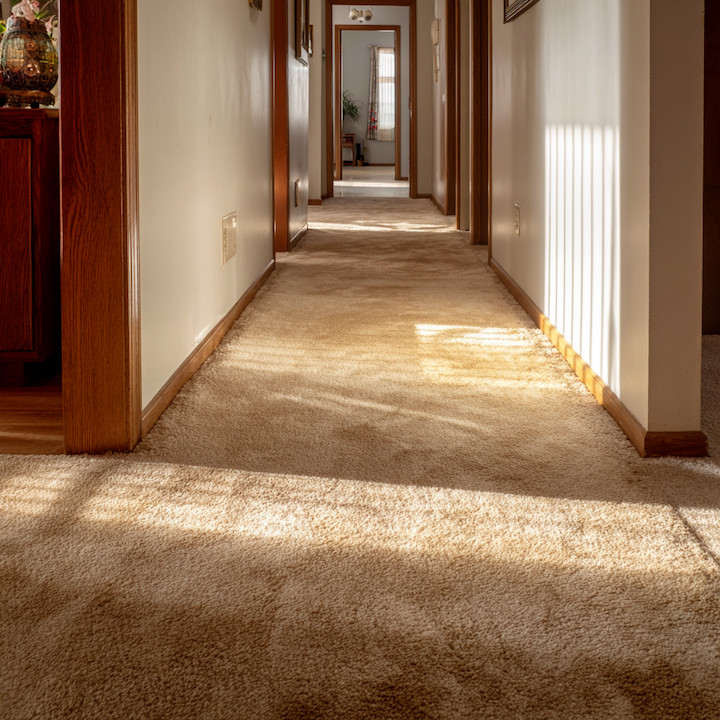
The last box left on a Saturday in September. Ryan loaded it into a hatchback that barely closed and drove to Nashville with everything he owned in the back seat and the trunk. Terri stood in the driveway and watched until the car turned the corner.
Craig was in the garage. He had been in the garage since seven, organizing a shelf that didn't need organizing. He came out when the car was gone.
They had bought the place when Ryan was in kindergarten. Three bedrooms, two baths, a ranch on a quiet street in Bartlett where the yards were big enough for a dog and the neighbors knew each other's names. The dog was gone now too. Thirteen years of a golden retriever who slept on the carpet in the hallway every night and left a shadow in the pile that no amount of cleaning had removed.
Terri went inside. She walked the hallway in socks and felt the carpet compress under her feet the way it had for sixteen years. Builder-grade, installed when the house was new, the color somewhere between beige and apology. Traffic patterns ran from the front door to the kitchen. The living room had a constellation of stains near the couch from a decade of movie nights with popcorn and juice boxes.
She stood in the kitchen. The vinyl sheet flooring had been there since they moved in. It was lifting at the seam near the dishwasher where water had gotten under the edge. She had put a rug over it three years ago. The rug was still there.
Craig leaned against the counter. "What are we talking about? Carpet again?"
"Not carpet." She looked at the hallway. At the kitchen vinyl. At the living room where the couch had been in the same spot so long the carpet underneath was a different shade. "Something that doesn't remember everything."
Some houses wait for the family to change before they are allowed to.
The Samples
Grant came on a Tuesday afternoon. Terri had found him through her sister, who had her kitchen floor done the year before in a house two streets over. Her sister said two things: he showed up when he said he would, and he didn't try to sell her anything she didn't need.
He brought a canvas bag with six samples and set them on the kitchen table. No binder. No catalog. No laptop with a slide deck.
"Before we talk about price, pick up each one," he said. "Tell me what you notice."
Terri went first. Carpet sample. Plush, mid-grade, the kind of thing she would walk past at a store without stopping. She set it down.
"That's what you have," Grant said. "Builder-grade, nylon face, foam pad. It wears out in eight to twelve years with foot traffic. Yours lasted sixteen, which means the first ten were fine and the last six were a slow decline."
She picked up the second sample. Thinner. Lighter. She flexed it in her hands and it bent with a click.
"Laminate. Composite core with a photo layer on top. $3 to $7 per square foot installed. It works in low-traffic areas and rentals. It doesn't handle moisture."
Craig picked up the third. Heavier than the laminate. Rigid. He turned it over and looked at the backing.
"Luxury vinyl plank. LVP." Grant let them hold it. "Waterproof core, wear layer on top. $5 to $16 per square foot installed, depending on quality. Good LVP looks like wood, handles moisture, and takes a beating from kids, pets, and furniture. On 1,000 square feet, that range is $5,400 to $16,400 for the floor."
"What's the difference between five-dollar LVP and sixteen-dollar LVP?" Craig asked. He stocked both at Lowe's. He knew the boxes. He didn't know the floors.
"Core thickness, wear layer, and click system. The cheap stuff is 4mm with a 6-mil wear layer. It dents. The good stuff is 8mm with a 22-mil wear layer and an attached pad. It doesn't." Grant held up two LVP samples side by side. "Feel the difference."
Craig pressed his thumbnail into each. The thin one gave. The thick one didn't.
"The five-dollar version lasts eight years. The twelve-dollar version lasts twenty-five."
Terri picked up the fourth sample. Solid. Heavy. A warmth to it that the vinyl didn't have.
"Engineered hardwood. Oak. $10 to $27 per square foot installed. On 1,000 square feet, that's $9,800 to $27,100. The floor that adds value to the house."
"And tile?"
"Porcelain. $19 to $44 per square foot installed. Most people use it in kitchens, bathrooms, and entryways. Most durable surface in the house, but the labor is twice what LVP costs because every piece gets set individually."
Craig was doing the math. He had spent twenty-eight years running into buildings and calculating load times. Mental arithmetic was habit. "So the same thousand square feet is either $5,400 or $27,000 depending on what we put down."
"That's the spread," Grant said. "And that's before we know what's under your carpet."
The floor a homeowner picks tells you more about how they live than how much they spend.
The Kitchen Seam
Grant came back Saturday morning to pull the carpet. Craig had moved the furniture the night before. Couch in the garage, dining table against the wall, bookshelves emptied and standing on the porch.
The carpet came up in strips. The pad underneath was yellow where it had been covered and brown where moisture had reached it. The tack strips along the walls pulled out with a flat bar and a sound like tearing paper.
Terri watched from the dining room doorway. The subfloor was plywood, which she had expected. It was flat and dry in the hallway. Flat and dry in the living room. She started to relax.
Grant walked the exposed floor the way he walked every job. Hands at his sides, weight shifting from heel to toe, feeling for give.
He stopped in the kitchen doorway.
"Come here," he said.
The plywood at the transition between the hallway and the kitchen was dark. Not black, not rotten, but stained. He knelt down and pressed his palm against it. It gave.
"This is where your vinyl seam was leaking," he said. "Water got under the vinyl at the dishwasher, traveled along the seam, and sat against the plywood at the transition. Probably for years."
Terri looked at the rug she had put over the kitchen seam three years ago. It was sitting in the corner now, rolled up and useless.
"How much?" she asked.
"Subfloor patch runs $2 to $4 per square foot for a small section. Cut out the bad plywood, sister the joists if they need it, screw down new plywood flush with the old. Your damaged area is about 30 square feet. Material and labor, $250 to $400."
"That's it?"
"That's it for yours. A bathroom leak nobody catches for five years can cost $1,500 to $3,000 in subfloor work before the new floor goes down." He paused. "Yours is a seam failure in a known spot. Small repair, clean edges."
Craig had been watching from the hallway. "Would the new LVP have hidden this the way the old vinyl did?"
"Yes. And in five more years the plywood would have delaminated completely and the floor would have had a soft spot you'd feel through the LVP." Grant pulled a section of the damaged plywood out with a pry bar. The underside was dark but the joist beneath it was dry. "The joist is fine. We caught it."
He had the patch in by noon. New plywood, construction adhesive, screws every eight inches, sanded flush at the edges. The transition between old subfloor and new was tight enough that Terri couldn't feel it when she walked across in socks.
The rug hid the seam. The seam hid the water. The water was patient.
Forty-Eight Hours
The LVP arrived on a Monday in twelve boxes stacked on a pallet in the garage. Grant didn't start installing it.
"These need to sit in the house for forty-eight hours," he said. "The material needs to reach the same temperature and humidity as the room it's going into."
Craig looked at the boxes. "It's vinyl. It's not going to expand."
"It will. Not much. But enough." Grant pulled a plank from one box and held it flat. "This was manufactured in a climate-controlled warehouse and shipped in a truck. Your house runs seventy-two degrees and forty-five percent humidity in October. The material needs to equalize or the click joints will stress and the seams will gap."
"The flooring guy at work told me LVP doesn't need acclimation," Craig said.
"He's half right. LVP is more stable than hardwood. Hardwood needs a week minimum, sometimes two. LVP needs forty-eight hours. The installers who skip it are the ones who get callbacks in February when the house dries out and the gaps open."
Grant pulled a moisture meter from his bag. A small device with two prongs. He pressed it against the subfloor in three spots.
"Subfloor is at seven percent. Needs to be under twelve for LVP, under nine for hardwood. You're fine." He checked the new plywood patch in the kitchen transition. "Eight percent. Good."
He wrote the readings on a piece of tape and stuck it to the wall where it would be hidden behind the baseboard. "I document moisture readings on every job. If there's ever a warranty claim, the manufacturer's first question is whether the installer tested the subfloor. If the answer is no, the warranty is void."
The boxes sat in the living room for two days. The house smelled like new material and possibility. Terri walked past them every morning on her way to the kitchen, stepping over the stacked planks in her socks on a subfloor that was bare and clean and waiting.
The two days the floor sat in the house were the two days that kept it there for twenty-five years.
The Transitions
The LVP went down in the living room first. Grant and one helper, starting at the far wall, working toward the hallway. The click-lock system was rhythmic. Set the plank, angle the tongue, press flat, tap tight. Two hundred square feet by lunch.
The hallway took the afternoon. Narrow, with three doorways and a closet. Every doorway needed a transition strip where LVP met the existing carpet in the bedrooms.
"This is where most floors fall apart," Grant said. He held up a T-molding, a thin metal strip with a channel that sat in the gap between two floor surfaces. "Cheap installers glue the transition to the floor. I screw a track into the subfloor and snap the molding in. Glue lets go in two years. A track holds."
Craig was watching from the doorway. "How many transitions do we have?"
"Three bedroom doors, one bathroom, one closet, and the kitchen entry where LVP meets tile. Six transitions." Grant set the T-molding against the doorframe. "Transitions run $15 to $40 each depending on the type and material. T-moldings for same-height floors, reducers where the new floor is higher than the old, thresholds at exterior doors. On your house, about $150 to $250 total."
The kitchen was the bigger conversation. Terri wanted tile from the kitchen entry to the back door, about 120 square feet. The LVP would run up to the kitchen threshold and stop.
"Tile on a plywood subfloor needs cement board underneath," Grant said. "Quarter-inch cement board, screwed and thinset to the plywood, then the tile goes on top. That raises the kitchen floor by about three-eighths of an inch over the LVP."
"Will I feel that?" Terri asked.
"Not with a reducer strip at the transition. With the reducer, it's invisible."
The tile took two days. The LVP took one. The transitions took half a day on their own. The baseboard, which Grant had removed before starting, went back on last. New quarter-round at the base to cover the expansion gap between the LVP and the wall.
"Quarter-round and shoe molding runs $1.50 to $3 per linear foot installed," Grant said. "Your house has about 180 linear feet of base in the areas we floored. That's $270 to $540 for trim."
Craig added it up. "So the transitions and trim are $400 to $800 on top of the floor."
"On every job. The homeowner who budgets only for the flooring is always surprised by the finish work."
The floor is what you see. The transitions are what you feel.
The Number
Grant finished on a Friday. One week from carpet removal to final trim. Terri had lived in the house the entire time, sleeping in the bedroom where the carpet was untouched, cooking in the garage on a folding table with a microwave and a hot plate Craig set up the first morning.
She walked the finished floor Friday evening in bare feet. The LVP in the hallway was warm and quiet. No creak, no give, no shadow where the dog used to sleep. The tile in the kitchen was cool and even. No seam lifting. No rug hiding anything.
The total came in at $9,800. LVP at $11 per square foot on 700 square feet for the living areas. Tile at $22 per square foot on 120 square feet for the kitchen. Subfloor repair at $350. Transitions and trim at $680. Carpet removal and disposal at $450. Inside the range Grant had quoted at the kitchen table.
Craig looked at the floor the way he used to look at the station after a deep clean. Everything in place. Everything working.
"I thought it would be more," he said.
"Most people do. Flooring reads expensive because the per-square-foot number sounds high when you multiply it by a thousand. But the labor is fast if the subfloor is clean and the material is acclimated. This job was straightforward."
"What's not straightforward?"
"Stairs. Hardwood on stairs runs $75 to $120 per step, and a staircase with thirteen treads and risers can add $1,000 to $1,560 to a job." He looked at the hallway that led to the front door. "Multi-level homes where every floor meets at a different height. Radiant heat under tile. Herringbone or chevron patterns that double the labor." He paused. "This house is a ranch. One level, clean subfloor, no stairs. That's the job every installer wants."
The flooring contractor connected through this platform carries an active Tennessee Board for Licensing Contractors license with a monetary limit that covers the scope of work. General liability insurance and workers compensation for every crew member on the job. References called, not collected. License verified directly with the state. Vetted in person by someone with more than two decades in Memphis construction.
When a homeowner is ready, the platform connects them with one contractor. Not a list. Not a bidding war. One vetted professional matched to the scope of work and the neighborhood. The contractor gets a warm introduction with the estimate details already in hand. The homeowner gets one phone call, not five.
The estimator gives unlimited estimates without collecting anything. No account. No email. No phone number. Homeowners only share contact info if they choose to connect with a contractor. The estimate belongs to the person who built it.
The subfloor repair was $350. Skipping it would have cost the floor.
October
Terri sat in the living room on a Sunday morning in late October with coffee and the crossword. The cat was asleep on the rug she had bought for the new floor. Not to hide anything underneath it, just because she liked the color.
Craig came in from the garage. He had been sorting tools again. He looked at the floor and then at her.
"Ryan wants to come home for Thanksgiving," he said.
"Good."
"He's bringing someone."
"Better."
Craig sat down in the chair by the window. His boots were clean. He had started taking them off at the door without being asked, which Terri noted but didn't mention.
The hallway was quiet. No carpet absorbing footsteps. No shadow where the dog used to lie. Just a floor that was clean and level and ready for whatever came next.
"I keep thinking we should have done this five years ago," Craig said.
"Five years ago we had a teenager and a dog and a kitchen floor that was fine under a rug." Terri looked at the hallway. "We did it when the house was ready."
The light came through the front window and hit the LVP at an angle that showed the texture in the grain pattern. It looked like wood. It felt like wood under her feet. It would still look like wood in twenty years.
A floor doesn't change a house. It tells you the house has already changed.
Flooring connects to interior renovations. New floors often follow kitchen or bathroom remodels. And once the floors are done, fresh paint on the walls completes the refresh. New flooring heights sometimes require door trimming or replacement. Basement finishing projects include flooring as a final phase.